Super
Street Fighter II Turbo
REVIEW:
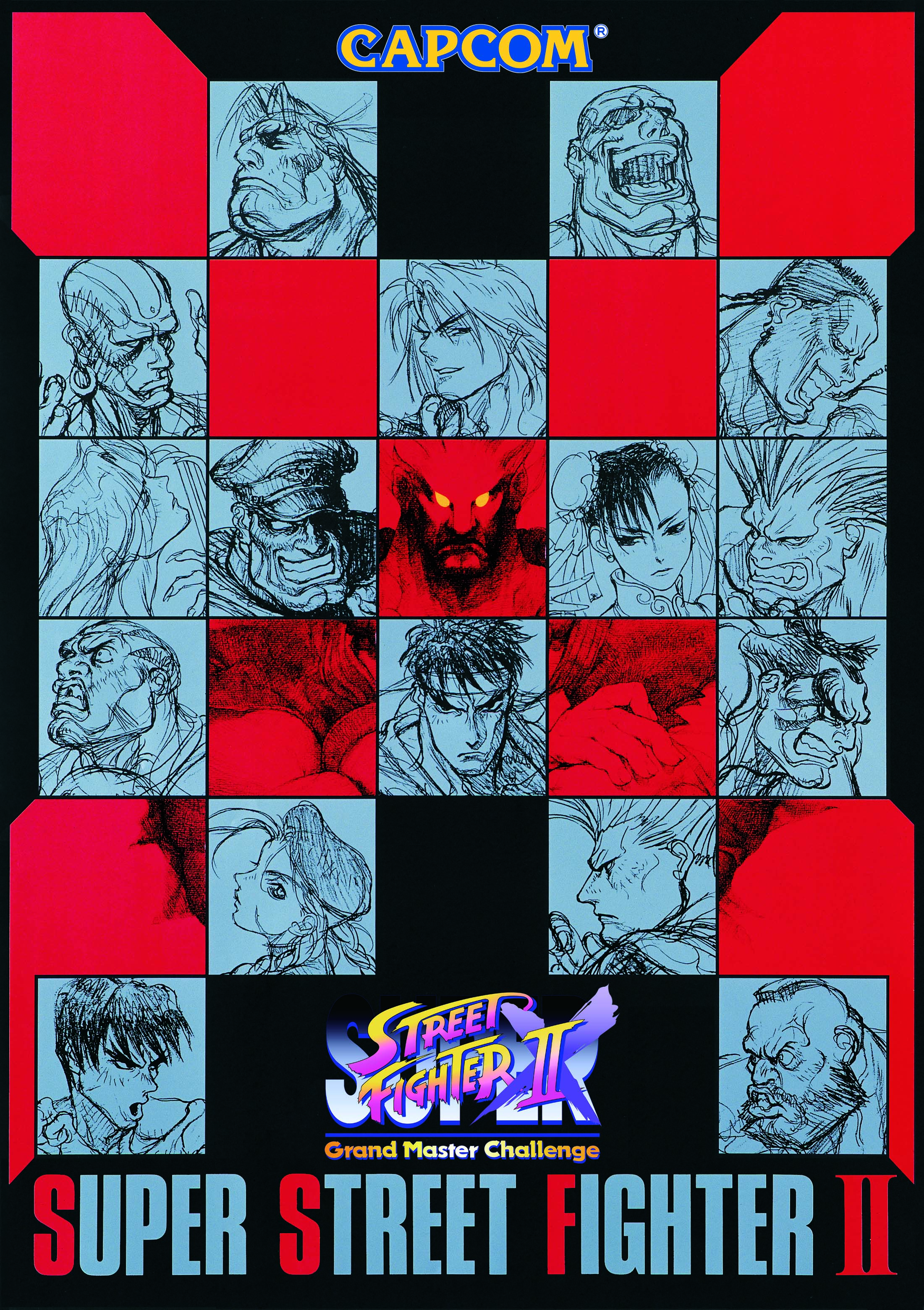
Super Street Fighter II Turbo is
the
final arcade update to Capcom's long-running and hugely successful Street
Fighter II series. Commonly dubbed "Super Turbo" (for
short) in competitive circles, this installment also released under the title of Super
Street Fighter II X for Matching Service on Dreamcast and arcades. Super
Street Fighter II Turbo brought back
everything that made the SF2 series so successful since its debut in 1991.
New character colors, reworked stages, new moves for returning characters, and
brand new gameplay mechanics such as
Super Moves and Air Combos. While casuals might've overlooked the "minor" changes and improvements over the prequel (Super SF2),
returning fans were treated to solid gameplay enhancements that would extend the
competitive lifespan of Street Fighter for years to come.
|
|
|
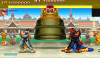
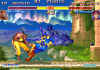
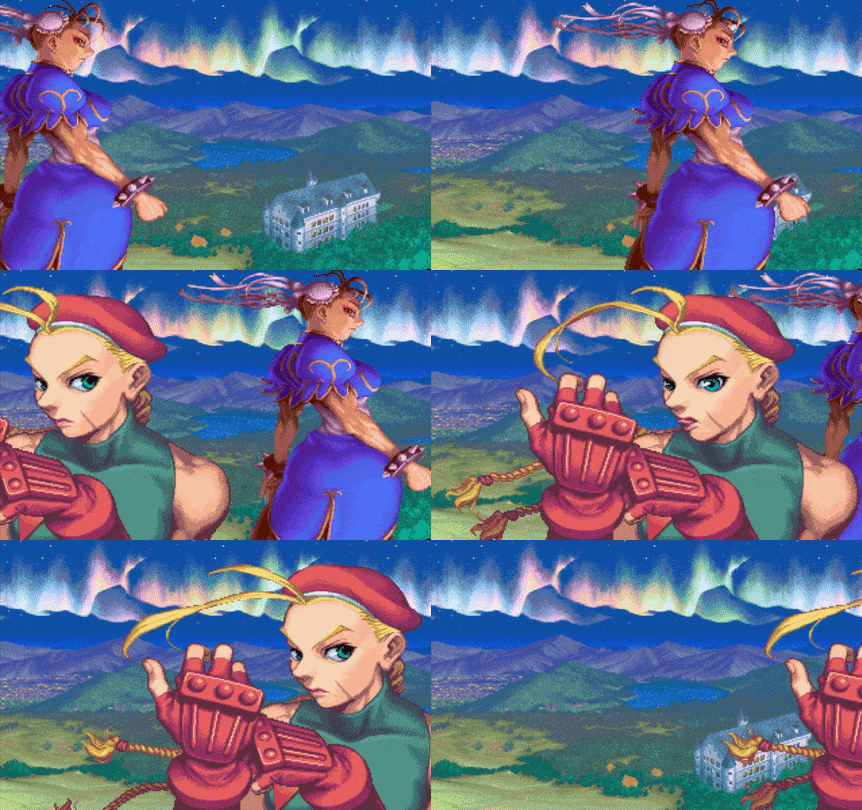
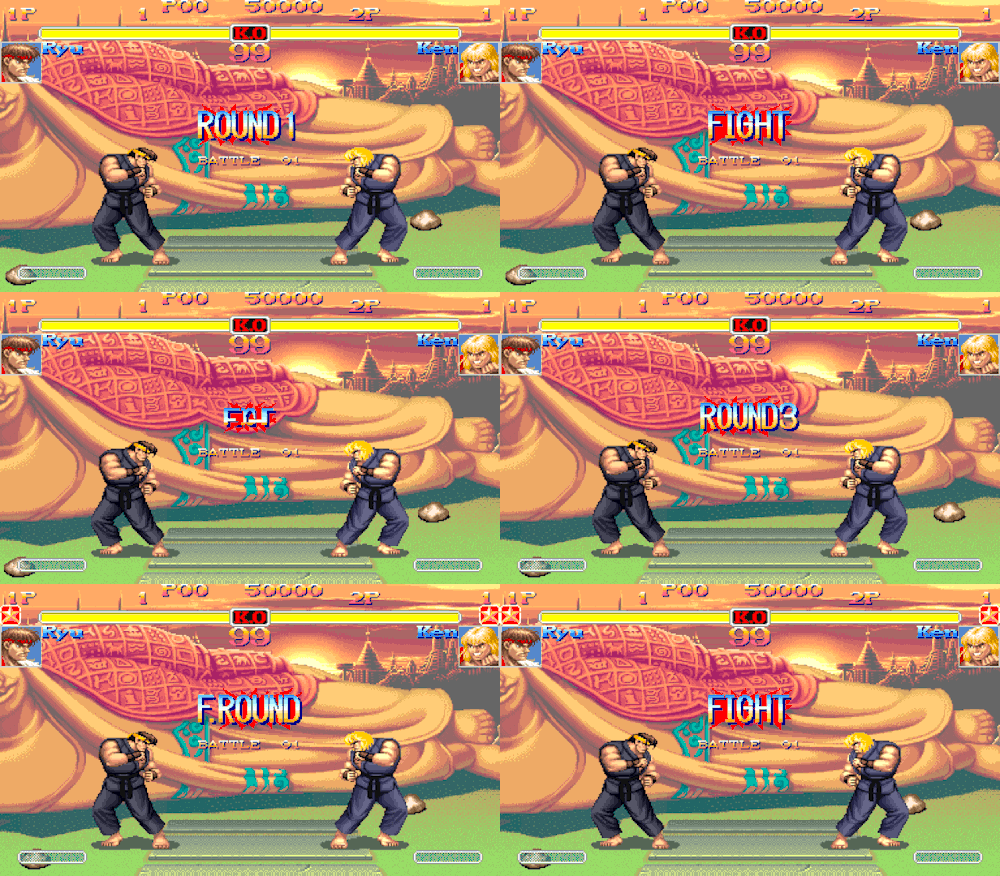
SSF2T's
intro movie is still amazing...
|
Super Street Fighter II Turbo adds a Super Meter for the
first time ever in the series, enabling characters to perform a powered-up Super
Move when full. SSF2T also adds a handful of new moves & animations for
returning
characters — enabling new
combo possibilities. Super Turbo features four gameplay speed
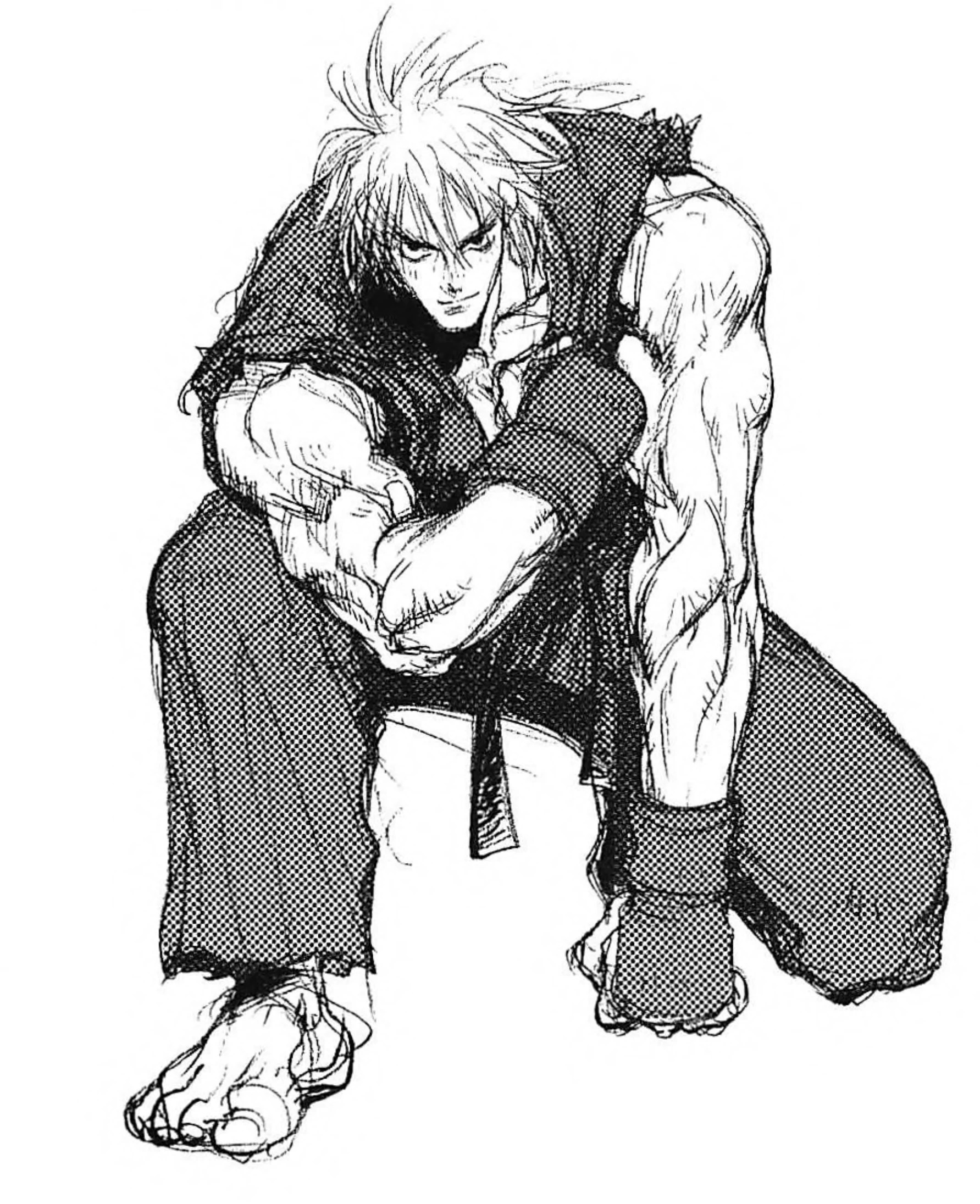
settings. Super Turbo also hosts the debut of a new shoto character (and
one who would become one of the most
iconic Street Fighter characters of all time)... Akuma ("Gouki" in
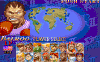
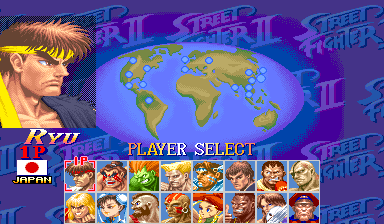
Japan). In the arcade version, players had to input a
secret code on the character selection screen in order to play as Akuma. (The
secret code for Akuma: On the character select screen, highlight Ryu, wait three seconds. Then highlight T. Hawk, Guile, Cammy and Ryu, waiting three
seconds between each selection. Finally, highlight any character, press Start and all three Punch buttons simultaneously.)
|
|
|
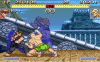
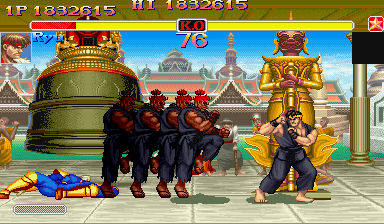
If you knew how to play as
Akuma... you were an instant badass.
|
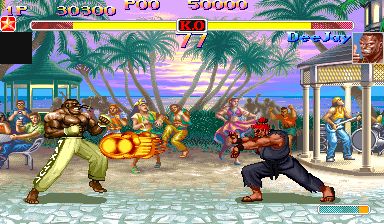
Super Turbo's Super Meter allows fighters to unleash powerful super combos when the gauge
is full. The Super Meter slowly increases as characters perform and connect
with special moves and attacks. This single element alone adds quite a bit of replay value to
the classic gameplay, as smart players can save and strategically use their
ultra-powerful super move to turn the tide of battle. Even though the graphics
look a bit aged compared to other fighters in 1994, Super Turbo
still holds its own. Besides, SSF2 Turbo's gameplay is widely regarded as the best version of
Street Fighter 2, and that's what matters most.
|
|
|
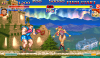
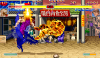
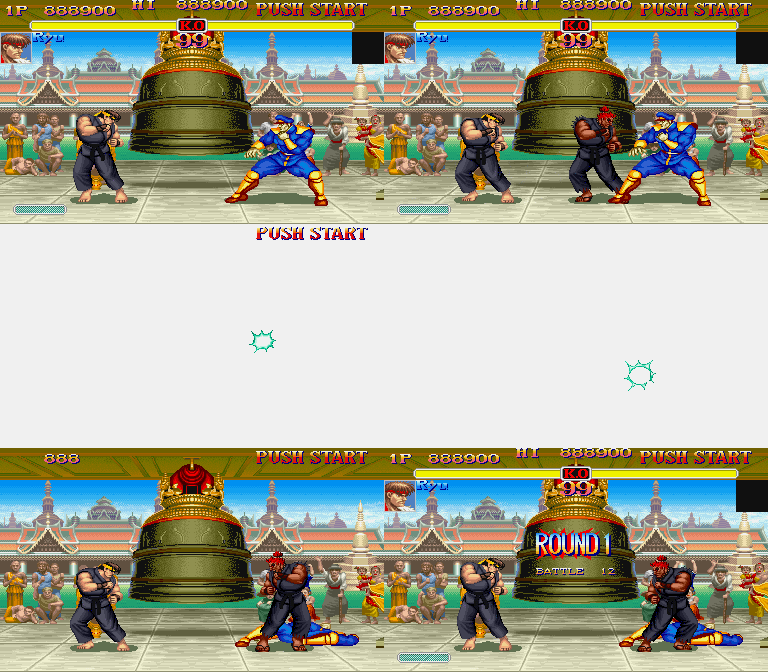
Akuma's
debut! Good times in 1994... (not so much for Bison).
|
In this final revision of the arcade smash hit, Capcom refined many things,
including balancing the roster to make the game fun again. The new moves, new
combos, character rebalancing, and fun addition of Super Moves / Super Meter
redefined SF2's tried-and-true gameplay to keep players coming back for decades to
come. The Super Meter would later evolve and become more interesting in the new
anime-visuals-inspired Street Fighter Alpha
series, which was the new direction Capcom moved in following Super SF2
Turbo closing out the SF2 series.
|
|
|
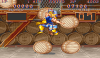
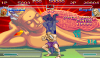
Here
Comes a New Challenger!
|
In 2008, an enhanced version of Super Street Fighter 2
Turbo was released for PlayStation 3 and Xbox 360, fourteen years after
the game's original launch. Super
Street Fighter II HD Remix introduces redrawn character sprites
and backgrounds created by the talented folks at UDON comics, along with new
BGMS for all stages and online netplay.
|
|

| Page Updated: |
May
5th, 2025
|
| Developer(s): |
Capcom |
| Publisher(s): |
Capcom |
| Designer(s): |
Noritaka
Funamizu, Haruo Murata Planners |
| Artwork
by: |
Bengus
(CRMK), Akiman, Kinu Nishimura |
| Platform(s): |
Arcade, 3DO, PC DOS, Amiga, PS2 (in SF: Anniversary Collection)
Dreamcast ( SSFII X for Matching Service: Grand Master Challenge) SSFII X for Matching Service: Grand Master Challenge)
Gameboy Advance (as Super SFII Turbo Revival)
|
| Release Date(s): |
February
23rd, 1994 Arcade
Nov. 7th, 1994
 3DO 3DO
Nov. 14th, 1994
3DO
Nov. 21st, 1994
 3DO 3DO
Nov. 23rd, 1994
 Arcade Arcade
May 5th, 1995
PC
June 1st, 1995
PC
June 2nd, 1995
PC
1995
Amiga
Dec. 22nd, 2000
Dreamcast
July 13th, 2001
GB Advance - as SSFII Turbo Revival
Oct. 30th, 2001
GB Advance - as SSFII Turbo Revival
Nov. 1st, 2001
GB Advance - as SSFII Turbo Revival
Nov. 2nd, 2001
GB Advance - as SSFII Turbo Revival
|
| Characters: |
Ryu,
Ken Masters,
Chun-Li,
Guile,
Dhalsim,
Blanka,
Zangief,
E. Honda,
Balrog,
Vega,
Sagat, M. Bison,
Cammy,
Fei
Long, Dee Jay, T.
Hawk, Akuma, Shin
Akuma
|
|
|
|
Featured Video:
|
|
|
| Related Games: |
Ultra
Street Fighter 2, Super Street
Fighter 2 Turbo Revival, Super
Street Fighter 2, Super SF2T HD Remix, Street Fighter 2, SF2 Champion Edition,
SF2 Turbo, Street
Fighter, SFIII: New Generation,
SFIII: 2nd Impact, SFIII:
3rd Strike, SFIII: 3rd Strike Online Edition, Street Fighter 4, Super
SF4, SSF4: 3D Edition, SSF4: Arcade Edition, Ultra SF4, Street
Fighter V, SFV: Arcade Edition,
SFV:CE, Street Fighter 6, Street
Fighter Alpha, Street Fighter Alpha 2, Street
Fighter Alpha 3, SFA3 Upper,
SFA3 Max, SFA: Anthology, SF:
Anniversary Collection, Street Fighter EX,
SFEX2, SFEX3, SF:
The Movie,
Super Puzzle Fighter 2 Turbo, Pocket
Fighter, Samurai Shodown 2, KOF '94, Killer Instinct, Art
of Fighting 2, X-Men: Children of the Atom, MVC2,
Fighter's
History: Dynamite
|
|

|
|
Gameplay
Engine
|
8.5 / 10
|
|
Story
/ Theme
|
8.5 / 10
|
|
Overall
Graphics
|
8.5 / 10
|
|
Animation
|
8.5 / 10
|
|
Music
/ Sound Effects
|
9.0 / 10
|
|
Innovation
|
7.5 / 10
|
|
Art Direction
|
8.5 / 10
|
|
Customization
|
9.5 / 10
|
|
Options / Extras
|
8.0 / 10
|
|
Intro / Presentation
|
9.0 / 10
|
|
Replayability / Fun
|
9.5 / 10
|
|
"Ouch" Factor
|
9.0 / 10
|
|
Characters
|
10 / 10
|
|
BOTTOM LINE
|
9.2 /
10
|
|
Review based on Arcade
version
|
|
| Final
Words: |
There's no denying the Street
Fighter II series, in particular, when talking about the grassroots growth and
evolution of the fighting genre early on. This was it. Not Fatal
Fury, not Mortal Kombat,
it was Street Fighter, buddy. Yes, those games definitely had an
impact on what was to come in the future of the genre... but all around the
world, 100s of people were actually lining up for Super Street Fighter II
Turbo tournaments, whether official or unofficial. SF2 as a series was a global phenomenon, and it never stopped. This
was an unplanned competitive masterpiece that only Street Fighter could accomplish
in the 90s. Not many other fighting games or series would ever obtain this level
of community and competition until many years later, and most of them still can't
quite reach Street Fighter's level.
The success and decades-long hype comes as no surprise to me... just a lucky fan who played SF1
and SF2: The World Warrior at the arcades and got to experience the full
evolution of the genre. I remember the crowds around all the SF2 machines
throughout the series lifespan, and no other game would draw those types of
crowds until the likes of MVC2
(and maybe TEKKEN 3), in my
experience. I can only tell you what I saw with my own eyes, at 100s of
different arcades. ST (Super Turbo) was a monumental fighting
game that showed the world, yes... people will still play the same old Street Fighter
because they want to, year after year. The roster, the music, the variety, the
action, the many different match-ups, evolving strategies, and styles... and to think the series
had so far to evolve from this point. It's a beautiful thing.
While some 1994 "gamers"
with short attention spans immediately deemed Super Turbo
to be another rehash or "old" at the time of its release... the continued
support from players proved that Street Fighter 2 is timeless. People
actually wanted to keep playing the game (and still do), even with all
of its interesting-but-frustrating gameplay flaws. Most true fans of arcade
games weren't complaining about this upgrade because it really was the best version of
SF2 to date, and introduced Akuma, of course. The hype for Akuma / Gouki was
real at the arcade scene. Secret characters mattered back then!
Super Turbo is well known for being a title that ignited the
tournament scene and FGC in the early days. However, it's worth mentioning
the ST is not a "perfect" game. There are several
major gameplay engine issues that are considered "broken" by today's
standards. There are plenty of character-specific examples of this and even
universal mechanics contribute to ST being, well... "unfair". Indeed,
there are some 8-2 match-ups, meaning certain characters will win 8 out of 10
matches against certain characters (on average) by using certain moves or
strategies. Unblockable set-ups, movement restricting block-stun tactics induced by air
attacks, big combo damage, arguably difficult inputs for advanced moves &
combos, spamming actually being effective, etc. Similarly to MVC2, the fact that
Super Turbo is so broken can make playing the game fun (or at least
addictingly competitive) at times... and the proof is in the pudding because
it's a timeless game and people
still play it. It proves that perfect game balance doesn't always matter the most in the end.
Personally, Super Turbo was never one of my top favorites. Although I
always held it in high regard, especially compared to many other 2D clone
fighting games out there in the 90s. Once the Zero / Alpha series was in full swing, I never really
had the urge to return to SF2 or ST all that often. And once Street
Fighter III arrived (especially its sequels), the pace, standards, and
complexity of Street Fighter was taken to a new level and finally felt
"right". Once you absorb
and experience the fundamentals and parrying system in SFIII:
3rd Strike for example, it's difficult to go back to the fast-paced /
spamming / cheating energy and broken rules of ST. Although I don't
particularly like to play ST, watching the pros is another experience
entirely. It's fun to watch, but this game has jank, son! As a player, it can be
super frustrating. Either way, I still love ST and will always will have a special place in my heart for
this game and Capcom era. It was the end of an era. And Super Turbo
really was just the humble beginnings of what Capcom was about to do in the mid
and late 90s.
~TFG
Webmaster | @Fighters_Gen
|
|
|
|
|
|
|
|
|
|
|
|
|
|
|

 View more
products at
View more
products at